Lab alumni

Hall of fame

Learn about the researchers, students, interns and volunteers who have helped shape The Lizard Lab.

← Back to People

Hall of fame

Postdocs

Yorick Lambreghts

Dr. Yorick Lambreghts

Postdoctoral Research Fellow

September 2024-September 2025

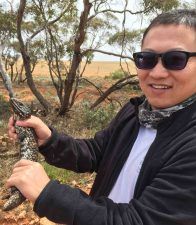
Yorick was employed on a Human Frontiers Research grant to study convergent evolution. Yorick’s role was to develop CRISPR methods for lizards, working with Oliver Griffith and Martin. Yorick has also been involved in other projects in the lab and at Macquarie and he continues to work on gene editing in lizards.

Learn more about Yorick and his research on his web page and Google Scholar.

Daniel Hoops

Dr. Daniel Hoops

Postdoctoral fellow

2022

Dan has had a long association with the Lizard Lab going back to his PhD. Dan has been involved with multiple cognition projects at the lab, but more recently, played a key role in some brain work on our ARC Discovery grant on the mechanisms of sociality in family-living lizards. He is also a collaborator on the effects of incubation temperature and sex on bearded dragon brains, among other things. Dan is currently a postdoctoral researcher at Adelaide University, funded by an ARC grant.

Learn more about Dan and his research on his web page and Google Scholar.

Chris Jolly

Dr. Chris Jolly

Macquarie University Research Fellow

1 March 2022 – 28 February 2025

Chris won a highly competitive MQRF to study animal survival in the age of megafire. He did this using skinks (Carlia) from areas with different burn histories. At the same time, Chris co-supervised a masters project on frog responses to fire, and we did a side-project on the response of sleepy lizards to fire cues (published in Biology Letters). Chris went on to win a DECRA on cane toads, and also write a field guide to the reptiles of the Northern Territory!

To find out more about Chris’ work, see his Google Scholar and Macquarie University Research profile.

Simon Baeckens

Dr. Simon Baeckens

Visiting Research Fellow

15 September 2019 – 31 August 2020

Simon Baeckens is an evolutionary and functional morphologist. At the time of his visit he was affiliated with the University of Antwerp (Belgium). Simon’s work is primarily on the evolution and function of morphological diversity in lizards. Unfortunately, Simon’s plans were curtailed by covid. Nevertheless, he wrote some influential papers while in the lab, including uncovering a link between the likelihood of sociality and chemical communication.

You can find more about Simon and his research on his website and Google Scholar. Simon now leads his own research group at UCLouvain in Belgium.

Benjamin Ashton

Dr. Benjamin Ashton

Macquarie University Research Fellow

15 August 2019 – 31 December 2022

Ben’s fellowship focused on the role of social interactions in driving the development of intelligence. Ben mostly worked on magpies, but also on lizards. Ben studied cognition in sex-reversed bearded dragons and was also a collaborator on quantity discrimination in both sleepy lizards and water skinks. Ben won a highly competitive ARC DECRA fellowship before also being hired as a lecturer in animal behaviour at Flinders University in Adelaide, where he is now based, and runs his own lab.

To find out more about Ben’s work, see his Google Scholar profile and Flinders research profile.

Simon Clulow

Dr. Simon Clulow

Macquarie University Research Fellow

January 2018-December 2020

My research is diverse and interdisciplinary, focused in the fields of ecology, evolutionary biology, conservation biology and reproductive biology (specifically Assisted Reproductive Technologies and Gene Banking) within terrestrial vertebrates. I choose often to focus upon amphibians as my core model, although I also work on reptiles, mammals and birds. These research fields and techniques often integrate, with many of my projects incorporating both field and laboratory elements. My work in the fields of ecology, conservation, and evolutionary biology has often involved large-scale and/or long-term field projects that have collected significant long-term data sets to explain ecological and evolutionary processes over time.

Simon is an Associate Professor at the University of Canberra. Check out Simon’s Google Scholar profile and his publications on ResearchGate. Simon is also the lead author of A Complete Guide to Frogs of Australia published by Australian Geographic.

Julia Riley

Dr. Julia Riley

2017

Julia worked on our grant on social intelligence and comparative cognition in lizards. For this work, she gained lots of experience dissecting and preserving brains. She did lots of other things related to the Egernia project too.

Read all about Julia’s work on her web page and Google Scholar.

Julia is an Assistant Professor and Canada Research Chair in Integrative Wildlife Ecology in the Department of Biology at Mount Allison University in Canada, where she leads a thriving research group.

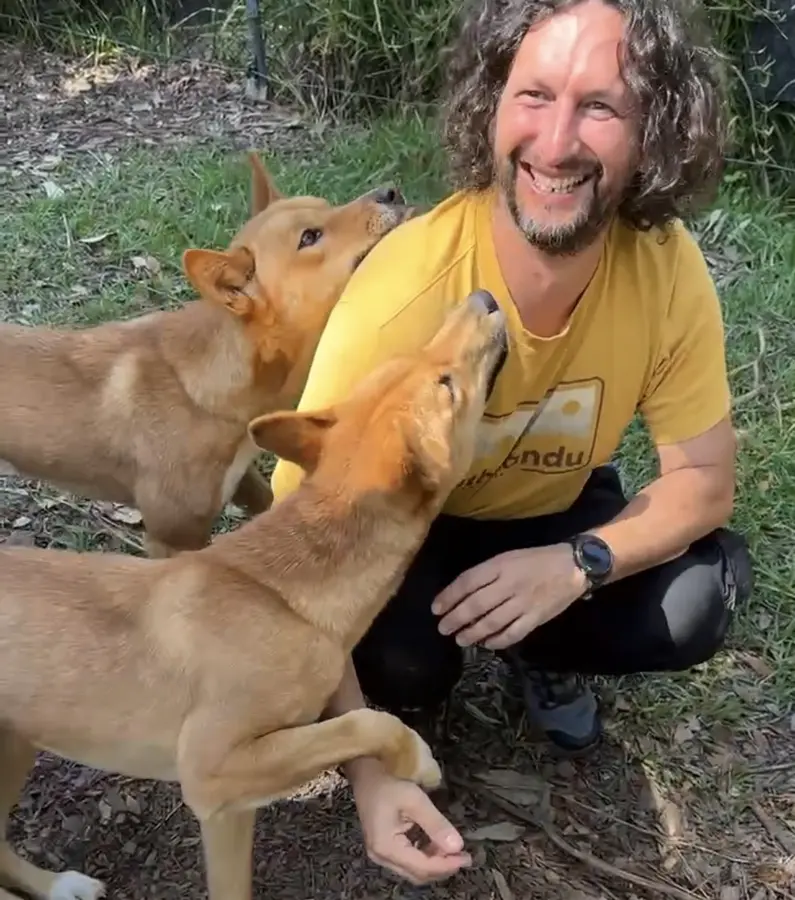
Sergio Naretto with two dingoes

Dr. Sergio Naretto

Visiting Research Fellow and Endeavour Postdoc

2016-2017

Sergio was a visiting postdoc from the National University of Córdoba, Argentina, where he was in the Department of Ecology and Biodiversity. Sergio joined the lab for a six month visit on his own funding before winning an Endeavour postdoc for an additional six month postdoc during 2016-2017. Sergio’s postdoc was to work on UV-based display behaviour in blue-tongue skinks. Part of this study involved a particularly tough challenge – trying to figure out how to synthesise a UV signal. Sergio ultimately teamed up with a lab working on nanostructures and they were able to replicate the UV structure of the tongue after matching it with the structures obtained from scanning electron microscopy. Sergio collected loads of data on blue tongue skinks.

Naïla Even

Dr. Naïla Even

August 2016 – February 2017

Naïla was the Lizard Lab’s lab manager and a postdoc to boot. She wears a lot of different hats! Her main job was to drive the brain work we are doing on social lizards in the Egernia group.

Naïla did her PhD in Andy Barron’s lab at Macquarie, on honeybees. She has a background in neurobiology. Unfortunately for us, but fortunately for Naïla, she was offered a much higher paying job at UNSW and thus moved to greener pastures!

Take a look at Naïla’s published work on ResearchGate. Naila also has a Google Scholar page.

Daniel Noble

Dr. Daniel Noble

November 2013-April 2015

After finishing his PhD in the lab, Dan helped Martin and Dick Byrne with an ARC-funded grant on social learning in Egernia  skinks. Dan then moved to the University of New South Wales on an Australian Research Council Early Career Researcher Award (ARC-DECRA), where he was also offered an extra year.

In his final year, Dan was able to win a highly competitive lectureship at the Australian National University (ANU) starting in February 2019.

Visit Dan’s webpage to find out about his current research.

Pau Carazo

Dr. Pau Carazo

2011

Pau is currently a lecturer at the University of Valencia. After leaving the lab, Pau was awarded a Marie Curie Fellowship at the University of Oxford, where he worked with Dr. Tommaso Pizzari’s at the Edward Grey Institute. Pau is still an active collaborator with several members of the lab. While a postdoc in the Lizard Lab, Pau worked on spatial cognition in Eulamprus quoyii with Martin, Dani and Dan. He also worked on signalling in Blue-tongue skinks with Martin, and several other on-going projects.

Check out Pau’s Behaviour and Evolution lab web page.

Phil Byrne

Dr.Phil Byrne

2006-2007

 Phil won a Claude Harris Leon postdoctoral fellowship. He worked on sexual selection in foam nest frogs (Chiromantis xerampelina). These frogs form extraordinary mating aggregations in which one or a few females mate with multiple males. There is no male-male competition. Phil did amazing experiments testing for direct and indirect benefits of polyandry.

Phil was awarded a fellowship at Monash University. In 2011 he moved to the University of Woolongong, where he has a permanent position.

Learn about Phil and his research on his lab web page and his Google Scholar.

Lydia Du Toit

Dr. Lydia Du Toit

2005

Lydia was funded by a combined National Research Foundation-University of the Witwatersrand postdoc. Lydia worked on the cognitive ecology of molerats. She tested the role of habitat complexity on spatial navigational ability and memory retention by comparing long-term captives with freshly caught wild individuals in a series of maze tests. This work was published here:

du Toit, L., N.C. Bennett, A. Nickless, and M.J. Whiting. 2012. Influence of spatial environment on maze learning in an African mole-rat. Animal Cognition 15:797-806.

Lydia is now living in Canada with her husband and two huskeys!

Jessica Stapley

Dr. Jessica Stapley

2004-2005

Jess worked on UV-status signalling in Augrabies flat lizards (Platysaurus broadleyi) and did an elegant experiment in which she reduced UV reflectance using a combination of sunblock and car wax! Jess was also involved with a project on the Waterberg flat lizard (Platysaurus minor) with Belinda Lewis and Martin Whiting. Jess then left the lab to do a postdoc in Panama, through the Smithsonian Tropical Research Institute (STRI). She briefly moved back to Canberra before moving to the UK with Stuart Dennis, before taking up a postdoc in Jon Slate’s lab at the University of Sheffield. In December 2009, Jess was awarded a Marie Curie fellowship to return to STRI in Panama.

Jess is currently a researcher in Zurich. Learn about Jess and her research on her web page and Google Scholar.

Devi Stuart-Fox

Dr. Devi Stuart-Fox

2003-2006

Devi spent four years in South Africa funded by fellowships from the National Research Foundation (NRF) and Claude Harris Leon Foundation. Devi used visual modelling to examine the interaction between sexual and natural selection in South African dwarf chameleons (Bradypodion spp.). Devi collected data on morphology and color signals (using field spectrophotometry) in response to social and sexual interactions for most currently recognised species of dwarf chameleon. This work also involved the collection of fine-scale habitat data (vegetation structure, background contrast, light environment) and conducted field experiments to quantify colour change in response to social stimuli and interactions with potential predators. Devi is currently a tenured academic at the University of Melbourne.

Check out Devi’s lab here and her Google Scholar.

Adnan Moussalli

Dr. Adnan Moussalli

2003-2005

Adnan was associated with the lab as Devi’s chameleon field partner and as a lab stats adviser and general trouble-shooter.

While in the lab, Adnan finished writing his PhD. Following this, he followed his true passion: land snails! Adnan took up a postdoc on African snail systematics and biogeography with Dai Herbert at the Natal Museum.

When he moved back to Australia with Devi he began a postdoc at Museum Victoria, before accepting a permanent position in 2010.

Hall of fame

Past visitors to the lab

Dr Rachel Behrmann with a blue-tongued skink

Dr. Rachel Behrmann

Visiting Researcher

2026

Rachel is an economist at Georgia Tech University, with a strong interest in herpetology. She also does lots of reptile outreach. Rachel visited for several months and collaborated with Martin and Birgit to test the decoy effect in bearded dragons. We think she will be back.

Guillem Casbas Pinto

Guillem Casbas Pinto

Visiting Researcher

2025 (almost six months)

Guillem visited the lab for almost six months in 2025 to visit both Martin and Rick Shine. He spent this time writing up papers for his thesis, having discussions, and giving presentations to the lab. Guillem’s PhD is supervised by Dr Oriol Lapiedra and investigates the ecological impact of invasive species on the keystone lizard Podarcis pityusensis, analysing behavioural adaptations, morphological changes, and the resulting alterations to island ecosystem dynamics, including trophic relationships and nutrient cycles. His PhD is through Universitat Autònoma de Barcelona and CREAF.

Learn more about Guillem and his research through CREAF, ResearchGate and Google Scholar.

Christian Alessandro Perez-Martinez in the field

Dr. Christian Alessandro Perez-Martinez

Visiting Scholar

2017–2018 (approximately eight months)

Christian did his undergraduate studies at Harvard University, where he was associated with Jonathan Losos’ lab. After graduating, he was funded by Harvard University to visit the Lizard Lab and work on frilled-necked lizards. Christian tested predictions from deimatic display theory to explain the function of the frill. This involved capturing lizards at night while they slept and returning them to enclosures where he could conduct experiments under semi-natural conditions. The experiments involved presenting the lizards with a model predator—a raptor—and simulating a non-contact attack. Christian also measured frill colour and collected standard morphological measurements. This work has been published (see publications page). Christian then did his PhD with Manuel Leal at the University of Missouri on minititurisation in lizards. He is currently a a NOMIS–STRI Fellow at the Smithsonian Tropical Research Institute (STRI) in Gamboa, Panama.

Christian is an amazing natural historian and photographer. Check out his blog and Google Scholar.

Dr. Feng Xu

Dr. Feng Xu

Visiting Researcher

March 2015–March 2016

Feng visited the lab for a year from the Key Laboratory of Biogeography and Bioresource in Arid Land at the Xinjiang Institute of Ecology and Geography, Chinese Academy of Sciences. He worked on social learning in lizards.

Feng’s research spans the conservation biology of birds and large mammals, behaviour in lizards and birds, and the life-history evolution of amphibians and reptiles. His work has included surveys of endangered birds and mammals in northwest China and research into how animal behaviour is affected by predators and human disturbance.

Feng is now an Associate Professor at the Xinjiang Institute of Ecology and Geography, Chinese Academy of Sciences. Learn more on his website and ResearchGate.

Dr. Stephan Leu

Dr. Stephan Leu

Visiting Researcher

2012 and part of 2015

Stephan first visited the lab to initiate a collaborative project with Martin on signalling in sleepy lizards (Tiliqua rugosa) and its integration into social networks. In 2015, Stephan was based in Sydney and joined the lab to write up his work on sleepy lizards as part of his postdoc with Mike Bull at Flinders University. He also worked on social behaviour in frogs.

Stephan has a broad interest in behavioural ecology, particularly social behaviour. He studies the mechanisms and evolutionary factors that drive sociality, using social networks to investigate the causes and consequences of sleepy-lizard sociality, including resource sharing and parasite transmission.

Stephan is a Senior Lecturer in Animal Behaviour at Adelaide University and leads his own research group. Read more about Stephan’s research and publications on his website and his Google Scholar.

Dr. Yin Qi

Dr. Yin Qi

Visiting Researcher

2011

Dr. Qi is a professor in the Chengdu Institute of Biology, Chinese Academy of Sciences. He spent one year in the Lizard Lab as a visiting researcher. During his visit, he analysed data collected on an earlier lab trip to China and worked on an Eulamprus cognition project. His primary research area is animal behavioural ecology and evolution. He uses lizards as a model system to study social interactions, communication, local adaptation and evolution, including how animals signal aggression and dominance. His PhD research examined the spectacular and complex tail waves of Phrynocephalus vlangalii. Dr. Qi is one of relatively few behavioural ecologists in China and is a long-term collaborator with the Lizard Lab.

Learn more about Dr. Qi’s research here and on his ResearchGate.

Hall of fame

Students

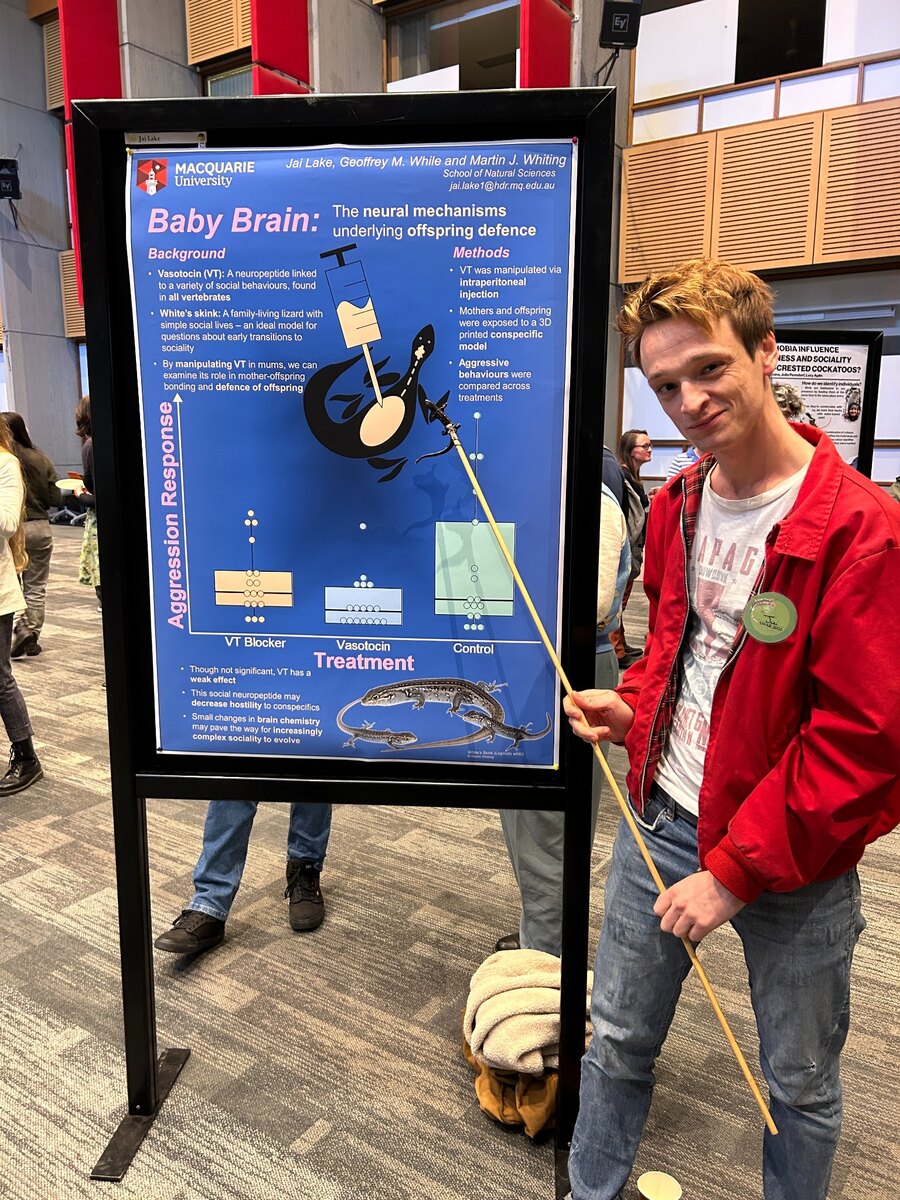
Jai Lake presenting his research poster

Jai Lake – PhD 2025

Jai’s thesis was “How to be social: understanding the mechanisms underpinning complex sociality”. Jai was co-supervised with Geoff While (UTAS). His work was part of an Australian Research Council grant on the mechanisms underpinning sociality (family living and parent-offspring bonding). Jai was also enormously helped (and trained) by Dan Hoops, and his work involved collaboration with Dustin Rubenstein (Columbia University) and Alex Ophir (Cornell). Jai explored the neural, genetic and hormonal mechanisms that mediate vital social behaviours such as parental care and social living. Jai compared the neural distribution of oxytocin, vasotocin, serotonin, and dopamine in the brains of two skink species, the facultatively family-living White’s skink (Liopholis whitii) and the solitary water skink (Eulamprus quoyii). He showed that vasotocin, serotonin, and dopamine are distributed across a wider range of brain regions in the social species, highlighting their purported role in moderating social behaviour. Jai also did some cool experiments manipulating arginine vasotocin (AVT), and did some gene expression work to examine the potential genes underlying parental care in White’s skink.

Joaquim Filipe Faria

Joaquim Filipe Faria – PhD 2025

Martin was a co-supervisor of Joaquim’s PhD while he was a student at the University of Porto. Joaquim was cosupervised with Rodrigo Megía Palma and James Harris. His thesis title was “In the blood: Influence of endoparasites on host behaviour and interactions.” Joaquim did some very cool work on parasitism in lizards and its influence on lizard hosts, including thermoregulatory behaviour.

Joaquim is currently Research Assistant, in the School of Infection and Immunity at the University of Glasgow. Learn more about his research on his web page and Google Scholar.

Victoria Russell with a lizard

Victoria Russell – PhD 2024

Victoria was registered at the University of Tasmania and co-supervised by Geoff While but spent significant amounts of time at Macquarie doing her experiments on plasticity in family living and unravelling the processes involved in the emergence of family living. Her PhD formed part of an Australian Research Council Discovery Project on plasticity and the origins of family living. Her thesis was titled “Processes that influence the emergence and refinement of sociality within the Egernia lizard group.” Victoria was also impacted by the COVID lockdown and did a great job pulling her thesis together despite this setback.

Harry Suter

Harry Suter – PhD 2023

Harry did a co-tutelle through the University of Bristol and Macquarie University. His team of supervisors included Andy Radford, Ben Ashton, Ines Braga Goncalves and Martin. Harry’s thesis was on the social drivers of cognitive evolution. To this end, Harry worked on cichlids, primate brain evolution, a model of inhibitory control, and lizards. Harry was greatly constrained by COVID and this delayed his arrival in Australia, but he ended up putting together an excellent thesis. His thesis centred around social drivers of cognition, with an emphasis on the role of outsider interactions, which provides a novel dimension to our understanding of the evolution of social intelligence.

Yorick Lambreghts

Yorick Lambreghts – PhD 2023

Yorick was registered at the University of Tasmania and co-supervised by Geoff While. His PhD formed part of an Australian Research Council Discovery Project on plasticity and the origins of family living. Yorick’s focus was on kin recognition, for which he mostly used Saiphos equalis, which has bimodal reproduction and an intermediate stage. His thesis was titled “Unravelling the co-evolutionary dynamics between kin recognition and social complexity”. Yorick was also hampered by the COVID lockdown but still managed to pull together an excellent thesis.

Learn more about Yorick and his research on his web page and Google Scholar.

Kathy Potter

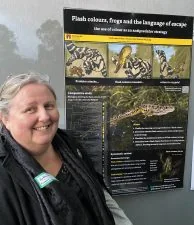
Kathy Potter – MRes 2023

Kathy Potter

Masters thesis: Flash colours frogs and the language of escape

Flash colours are typically defined as concealed, bright, or contrasting patches, revealed in movement, and associated with antipredator tactics. They are part of a collection of sensory modalities that are the foundation of flash behaviour, however, linguistic ambiguity and limited testing of hypotheses mean that their function is poorly understood. To rectify these issues, I conducted a systematic review resolving terminological synonymy across taxonomic groups and categorising hypotheses for improved future discoverability and comparison. I then conducted experiments with avian predators and simulated prey to determine if deployment of flash colours during escape affects naïve predator foraging behaviour. These experiments were based on frog escape behaviour and included visual modelling of green and golden bell frog flash colours. 

Follow Kathy on Twitter


Rachel Wong

Rachel Wong – MRes 2023

Rachel did her MRes thesis on quantity discrimination in lizards. For this, she did a systematic review of quantity discrimination and also tested for quantity discrimination in eastern water skinks (Eulamprus quoyii) using digital stimuli on an iPad. We combined her results with those of a study by Simon Jeni and this work was published in Animal Behaviour (see Publications). Rachel has a keen interest in animal cognition and is a very good dog trainer!

Liam Agnew

Liam Agnew – MRes 2022

Liam Agnew

Masters thesis: Reptile responses to artificial refuges and fire cues in post-fire environments

In my thesis I examined how an artificial refuge design, the ‘Habitat Pod’, influenced the diversity, number of detections, and behaviour of ground-dwelling reptiles in post-fire environments. In the field component of my work I detected greater numbers of small leaf-litter dwelling skinks at burnt sites with Habitat Pods added. I also found the internal refuge spaces buffered from extreme temperatures while the external spaces created a moderate hot spot. In the captive component for my work I found that lizards in simulated post-fire environments increased their emergence and foraging behaviour, suggesting they had behavioural adaptations to post-fire survival. My research shows that the Habitat Pod provides benefits to reptiles in post-fire environments, however, effects may be species-specific.


Levi Brown

Levi Brown – MRes 2023

Levi Brown

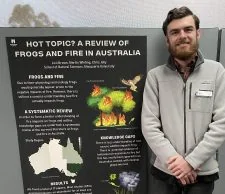
Masters thesis: Detection of Fire-related Cues by Frogs

In an increasingly fire-prone world it is important to understand how animals detect and respond to fire. The ability of animals to respond to fire is dependent on their ability to detect and appropriately respond to its olfactory (smoke) and auditory (sound of fire) cues, akin to prey animals using cues to detect predators. However, the ability of animals to successfully do so is poorly documented, particularly in frogs. To better understand the capacity for frogs to detect and respond to fire, I synthesised the current knowledge of the responses of frogs to fire and assessed the potential use of olfactory, auditory and multimodal cues as a means to detect and respond to fire; and conducted behavioural trials where I exposed two species of Australasian tree frogs to the olfactory and auditory cues of fire and assessed their behavioural responses and environmental usage.

Follow Levi on Twitter


Ko-Huan Lee

Ko-Huan Lee – PhD 2022

Ko-Huan Lee

PhD project: Bacterial and parasitic effects on lizard performance. I was supervised by Martin Whiting and Stephan Leu. My project builds on the famous sleepy lizard (Tiliqua rugosa) system and the garden skink (Lampropholis guichenoti). I investigated how multiple bacteria or parasites co-occur, and their effect on host performance, including movement patterns, sprint speed, endurance, foraging efficiency and thermal preference. I also explored questions about how these changes can affect parasite transmission at the population level using social network analysis. In addition to science, I love diving and spearfishing! I dive all over the south coast of Sydney and spear a range of species from mowies to dollies. Always ready to jump into the sea when I have spare time.

Check out Ko-Huan’s web page

Follow Ko-Huan on Twitter


Kari Soennichsen

Kari Soennichsen – MRes 2021

Kari’s thesis was on the spatial ecology of an apex predator, the perentie, in arid Australia. Kari was supervised by Simon Clulow and Sean Doody with some help at the end by Martin.

Kari’s aim was to assess the spatial ecology of V. giganteus. She used a robust radio telemetry data set encompassing the movements of 25 adult perenties over three years to examine how home range size varies across individuals and between sexes. She also evaluated the degree of home range overlap within and between sexes to look for evidence of territoriality, and performed multi-year comparisons of individual home ranges to assess site fidelity in V. giganteus. Kari will be moving on to do a PhD focusing on reproductive ecology and adaptions to environmental parameters that have facilitated the wide geographic distribution of the genus.

Follow Kari on Twitter. Photo credit: Nick Gordon.


Stephanie Deering

Stephanie Deering – MRes 2021, PhD 2026

For her MRes, Steph began working on cane toads and then shifted to Magnificent Tree Frogs (Litoria splendida) when covid shut down her field work. Steph worked with a colony of tree frogs from the Kimberley of Western Australia. MTFs are not only spectacular, but known to aggregate in the wild. Steph’s thesis project examined their cognitive ability and also tested whether they aggregate for social reasons. Steph’s aim was to determine why L. splendida aggregates in groups in the wild and whether aggregations occur for social reasons. She also tested for an effect of familiarity using a matched-pair design where a focal frog was paired with both a familiar and unfamiliar individual in a neutral arena containing two identical refuges.

For her PhD, Steph moved to the University of Canberra where she was supervised by Simon Clulow and Richard Duncan. Steph was co-supervised by Martin and kept her desk in the lab! Steph studied the impacts of the invasive cane toad on the Torresian crow and whether crows show behavioural flexibility in response to a novel, toxic prey. Steph did lots of field trials with tethered, dead toads, measured the impact of the toad on crow populations, and did lots of aviary-based captive cognition trials with wild-caught crows. Steph has started to publish this work (see Publications) and more papers will be forthcoming shortly!

Steph is currently doing a postdoc with Mike Gardner in the Lab of Evolutionary Genetics, Conservation, and Sociality, at Flinders University. Read more about Steph’s work on Google Scholar and in this Ecological Society of Australia blog post written by Steph.

James Madden

James Madden – MRes 2021

James worked with Simon Clulow, Culum Brown and Martin Whiting for his MRes. He investigated learning in the Spotted Marsh Frog (Limnodynastes tasmaniensis). Specifically, he raised tadpoles in the lab and measured their cognitive ability before then measuring their ability as adults. In other words, does learning ability as a tadpole (i.e., larva) carry over to adulthood?

The title of his Masters project was “Influence of sex and larval experience on cognitive performance in a frog”. His research addressed the following questions: (1) Can tadpoles learn a visual association task? (2) Can frogs learn a visual association task? (3) Is any memory or behaviour retained through metamorphosis? (4) Does training in the larval stage effect adult performance? (5) Does sex have an effect on the learning or behaviour of tadpoles or frogs? 

Follow James on Twitter.

Iván Camilo Beltrán Arévalo

Iván Camilo Beltrán Arévalo – PhD 2020

Iván’s PhD was entitled “Taking the heat: Can mothers buffer global warming and still produce smart babies?” Iván did a series of novel experiments to establish how future global warming may impact on a range of traits in both oviparous and viviparous species and whether mothers can compensate for global warming.

Find out more about Iván on his webpage.

Check out Iván’s papers on ResearchGate.

Follow Iván on Twitter.

Angela Simms

Angela Simms – MRes 2019

For her MRes (Master of Research) thesis, Ang studied the spatial ecology, habitat selection, activity and demography of the Sulawesi forest turtle (Leucocephalon yuwonoi), which is considered Critically Endangered by the IUCN. The conservation of this species has been hampered by a lack of baseline ecology for this species. Angela conducted a field telemetry study of adult male and female turtles, and also collected data by capture-mark-recapture. Thanks to Angela and her team of Indonesian field assistants, we now have important baseline ecological data on this poorly studied species that can hopefully be useful to future conservation efforts.

Angela’s MRes was supervised by Simon Clulow, Sean Doody and Martin Whiting, but somehow she survived!

You can follow Angela and see her photos from the field on Instagram and Twitter.

Birgit Szabo

Birgit Szabo – PhD 2019

For her PhD, Birgit studied behavioural flexibility in Egernia group skinks and the potential links between sociality and cognitive ability.

Here is her PhD abstract: Comparative cognition recently advanced towards a wider taxonomic approach evidenced by an increase in non-avian reptile learning studies but our knowledge still exhibits many gaps. In primates, sociality is linked to enhanced cognitive ability. My aim was to investigate if sociality affects cognitive ability in four Australian lizard species. I specifically focused on behavioural flexibility, which is an index of an organism’s ability to cope with environmental change at a cognitive level. I applied the ID/ED attentional set-shifting paradigm which includes several colour/ shape discriminations, reversals of these discriminations, an acquisition of a new colour/ shape discrimination and a shift from colour to shape (and vice versa). Moreover, I tested how age affects learning, if behavioural flexibility correlates with unpredictable environmental conditions and how inhibitory control is exercised in different contexts. Finally, I tested if individual differences in learning could be explained by sex utilising a meta-analytic approach. All four tested species discriminated between onedimensional stimuli, however, only three out of four showed behavioural flexibility and only two species successfully completed the shift stage learning each set of stages like a new problem. Furthermore, juvenile lizards learnt at adult levels, behavioural flexibility was enhanced in the arid-adapted species and lizards showed context specific inhibitory skills. Neither trials to criterion nor the number of successful individuals differed between the tested species belonging to the Egernia group implicating no adaptations based on sociality in the tested context. Furthermore, the fourth tested, non-Egernia species, failed to perform even a single reversal. Importantly, resource predictability predicted learning proficiency in one species suggesting that other species-specific adaptations underlie differences in learning between species. Similarly, in my meta-analysis a sex difference emerged only between species. Overall, my results contribute important new insights into lizard cognition, however, we need more data on a broader range of lizards to make distinct conclusions on how sociality or ecology affect learning.

Check out Birgit’s web site, her ResearchGate page and Google Scholar profile. Follow Birgit on Twitter.

Isabel Damas Moreira

Isabel Damas Moreira – PhD 2019

For her PhD, Isabel examined the role of behaviour and cognition in the invasive ability of the Italian wall lizard, Podarcis sicula.

Part of PhD abstract: Behaviour is believed to play a key role in the success of invasive species, although the mechanisms are still unclear, especially for unintentional invasions. Members of the lizard genus Podarcis show high variability in their invasive potential and are thus a well-suited model for studying the role of behaviour during biological invasions. The Italian wall lizard, Podarcis sicula, is a globally invasive species that hitchhikes on transportation of people or cargo, and does well in novel environments. In addition to behaviour, there is mounting evidence that cognition may also be a determining factor for invasion success. The aim of my thesis was to understand the role of behaviour and cognition in determining what makes P. sicula such a good invader. I used animals from an introduced population in Lisbon (Portugal) to examine behavioural traits that might be linked to a species’ invasive success.

Although I focused on the invasive lizard P. sicula, my study highlights the potential role of behaviour and cognition in invasions more broadly. I predicted that P. sicula would have greater levels of behavioural flexibility than congeneric non-invasive species – P. bocagei and P. carbonelli. The ability to reverse a previously learnt discrimination can be indicative of behavioural flexibility. I used a discrimination task and a reversal and quantified the number of errors and overall learning ability of all three species. The invasive species had relatively less difficulty than the non-invasive species to reverse the task. Also, I found different cognitive ability between the invasive species and

Collectively, my thesis shows differences in cognitive skills between invasive and non-invasive Podarcis, and that the invasive P. sicula is able to socially learn from the same and different species. Also, P. sicula has behavioural traits (e.g. boldness and foraging efficiency) that can be linked to its invasive success. The results from these chapters highlight the potential importance of behaviour in biological invasions, and give insight into why this lizard species is such a successful invader, and into what impact it might have on native species. This work will hopefully contribute to a better understanding of the behavioural basis of invasions, and ultimately assist conservation efforts.

Check out Isabel’s web page and her ResearchGate and Google Scholar profile. Follow Isabel on Twitter.

James Baxter-Gilbert

James Baxter-Gilbert – PhD 2018

For his PhD, James worked on behavioural, ecological, and physiological adaptations by Eastern Water Dragons (Intellagama lesueurii) to anthropogenic landscapes.

Background

A prominent driver of biodiversity loss is habitat degradation and fragmentation resulting from human development and urbanization. Reptiles have suffered some of the most substantial population losses of all vertebrates; however, there are a certain reptile species that thrive in urban landscapes. What allows certain reptiles to survive and exploit urban landscapes where most cannot? Urban areas are a novel landscape that selects for particular life-history and behavioural characteristics, including high behavioural flexibility, altered stress physiology, modified morphologies, and increased reproductive output. James’ PhD research examined if urban Eastern Water Dragon populations are able to thrive because of population-level adaptations to the selective pressures of city life.

James is now a postdoctoral researcher at the University of Stellenbosch working with John Measey. Read more about his work here.

James’ publications are on ResearchGate and listed on Google Scholar. Follow James on Twitter. 

Jodie Gruber

Jodie Gruber – PhD 2018

PhD abstract: The cane toad (Rhinella marina) is a notoriously successful invader that has established in over countries worldwide. Research on invasive cane toads in Australia has revealed rapid evolution of morphological and physiological traits related to dispersal rate in invasion-front toads. Behavioural traits may have evolved in similar ways. Traits such as high exploration, risk-taking, neophilia (an attraction to novelty) and sociality (which enables social learning) may drive invasion success in cane toads as these traits are likely to enhance dispersal and adaptation to novel environments. My PhD tested this prediction using standardised laboratory trials to examine divergence in behavioural traits in long-colonised versus invasion-front populations across the cane toads’ invaded range. I tested exploration, risk-taking, neophilia and social attraction in wild-caught toads from long-colonised versus invasion-front populations from the cane toad’s ongoing invasion across tropical Australia.

I also conducted the same behavioural trials using common-garden raised toads to tease apart genetic from environmental effects on behavioural divergence. I also investigated the effect of climate in the absence of prolonged range expansion by conducted behavioural trials using invasive cane toads from wet and dry climates from two Hawai’ian islands. My research revealed strong divergence in behavioural traits that enhance dispersal and adaptation to novel environments across the cane toads’ invasion range. Invasion-front cane toads were more exploratory, had a higher propensity to take risks, were more neophilic and more social than were conspecifics from long-colonised populations from Australia and Hawai’i. Furthermore, common-garden raised toads exhibited the same pattern of behavioural divergence as seen in wild-caught Australian toads, suggesting a heritable component. My research reveals that differential selection on behavioural responses to encountering novel environments in long-colonised versus invasion-front populations has led to a distinctive highly exploratory, bold (risk-taking), neophilic and social behavioural phenotype at the invasion-front.

You can follow Jodie’s work and get her publications on her ResearchGate page. Follow Jodie on Twitter.

Arnaud Badiane

Arnaud Badiane – PhD 2018

 PhD project: Evolution of color (UV) signals in lizards

From Arnaud’s web page: Animals use a spectacular diversity of signals and studying them is central to understanding a range of biological processes including how animals interact socially, and how new species arise. According to animal communication theory, signal design evolves in response to two main selective forces acting on the tactical transmission of strategic information. Strategic design refers to any element associated with information content (i.e. signal reliability), while the tactical design has to do with the efficacy with which signals are transmitted, perceived, and processed by receivers in the environment (i.e. signal efficacy). Understanding how selection acting on the strategic and tactical components interact to shape signal design is crucial to unravelling the true complexity of animal communication. Colour signals constitute a major and functionally diverse class of signals. It is only recently that the signalling role of structurally produced colours, such as ultraviolet (UV), has been documented. UV colours, invisible to the human eye, have long gone unnoticed by scientists, and yet, their potential to remain hidden from predators lacking UV vision makes them particularly interesting.

During my PhD, I used lizards as a model to study the adaptive co-variation across and between UV colour features in relation to environmental factors and individual traits. More specifically, my objectives were 1.) to improve the general approach used to objectively measure small colour patches, 2.) to study how and to what extent habitat conditions can generate substantial variation in the design of UV signals at various levels of integration (i.e. intra-population and inter-population), 3.) to explore in details the information content of UV signals, that is investigating how design components relate to each other, and to individual quality traits, and 4.) to explore the possible roles UV colours may play in lizards, for example as deimatic (warning) displays.

To answer these questions, the European common wall lizard (Podarcis muralis) is an ideal model because males display sexually selected UV-blue signals on their flanks. First and foremost, after refining the methodology for reflectance spectrophotometry, I provided strong evidence that habitat conditions drive an adaptive response in the design of UV signals, whereby several signal design components respond to different selective pressures both within and between populations. In addition, I demonstrated that UV signals are complex multicomponent signals advertising male quality traits. Finally, I provided an example of UV patterns that potentially function as a deimatic display in the Australian northern blue-tongue skink (Tiliqua scincoides intermedia). This PhD thesis thus provided important insights rooted in animal communication theory and pave the way for future research foci.

To read more about Arnaud’s research and to follow his work, visit his web page. Follow Arnaud on Twitter.

Julia Riley

Julia Riley – PhD 2017

PhD: Social environment impacts behavioural development of a family-living lizard

For group-living animals, their social experience while growing up is known to influence multiple facets of their behaviour. My PhD research examined how social environment effects behavioural development in a unique social species – the family-living Australian tree skink (Egernia striolata).

I raised skinks either in isolation or in pairs, and examined the impact their social environment could have on (1) behavioural traits, (2) individual learning ability, (3) social learning ability, and (4) social competence (their behaviour when interacting with other individuals). My findings suggest that tree skink behavioural development was plastic depending on their social experience while growing up. But, tree skinks were also able to flexibly alter their social behaviour in response to the environment they are exposed to, even after long-term social isolation.

This research is evidence that isolation rearing does not consistently result in negative impacts on behaviour across all social taxa. Instead, tree skink behavioural development responds flexibly, and potentially adaptively, to the social environment in which they are raised.

Read all about Julia’s work on her web site and Google Scholar, where you can also follow her on Twitter.

Fonti Kar

Fonti Kar – MRes 2015

Fonti completed her masters (MRes) in 2015. She worked on the influence of social status on social learning in lizards with Dan Noble and Martin. Fonti was then hired by Dan and Martin to help to work on various projects and she was also our lab manager. She did an amazing job! Fonti moved to UNSW to do a PhD with Daniel Noble and Shinchi Nakagawa but she is still an integral member of the lab and has her lizards at Macquarie.

Kar, F., Whiting, M.J., and Noble, D.W.A. 2016. Influence of prior contest experience and level of escalation on contest outcome. Behavioral Ecology and Sociobiology 70:1679-1687.

Kar, F., M.J. Whiting, and D.W.A. Noble. 2017. Dominance and social information use in a lizard. Animal Cognition 20(5): 805-812.

To read about what Fonti is up to, check out her web page, and follow her on Twitter.

Daniel Hoops

Daniel Hoops – PhD 2015

Brain Anatomy in Dragon Lizards

For my PhD I wanted to study brain anatomy variation in agamid lizards of the genus Ctenophorus, which are colloquially referred to as “dragons” in Australia. A guide to the brain anatomy of a particular species is called an “atlas”. There is no brain atlas that I am aware of for any dragon species, and very little is known about the brain anatomy of lizards in general. A large part of my PhD was describing the anatomy of the dragon brain. I made the first atlas of a dragon brain and contributed to other works on dragon anatomy.

Comparing Dragon Colouration

A significant part of my PhD project was based around the fact that some dragon species have flashily-coloured males and drab-coloured females, while in other species both the males and females are drab. While this seems evident simply by looking at pictures of males and females of various species, I learned that comparing colour across species is not that simple. Lizard eyes are not human eyes, and a lizard may look quite different from the perspective of another lizard compared to the perspective of a human. I put a lot of effort into, and got a lot of help, properly quantifying differences in colour between males and females across species.

Variation in Dragon Brain Anatomy

Ctenophorus dragons may all belong to the same genus but they vary in life history, ecology, and sex in ways that make them an ideal group with which to study the associated variation in brain structure. Once I had figured out what a dragon brain looked like, I wanted to compare dragon brain anatomy across species to see if I could find patterns in how brain anatomy changed. I compared differences in brain structure with differences in external body morphology, ecological niche, and sexual selection to show that seemingly random differences in brain anatomy between species can be explained by evolutionary history.

Read all about Dan’s work on his web site. Follow Dan on Twitter.

Siobhan Dennison

Siobhan Dennison – PhD 2015

For my PhD, I investigated sociality and dispersal of the great desert skink, Liopholis kintorei. The great desert skink is one species of a unique group of Australian reptiles (the Egernia group), many of which live in stable, kin-based social groupings. The great desert skink is unique among Egernia because multiple individuals within their kin groups contribute to the maintenance and construction of the extensive burrow systems in which they live. This might suggest a level of cooperation not seen in any other reptile, and yet little is known about the population and group dynamics of this species. I am combined molecular tools with behavioural and mark-recapture data to investigate the social and dispersal behaviour of L. kintorei, and to test leading hypotheses on the maintenance of vertebrate sociality. Specifically I characterised the group structure, mating system and dispersal characteristics of this species, currently listed as vulnerable in Australia.

This information will be used both as a foundation for further study of the lizards’ social behaviour, and to provide insight into threatening processes, informing conservation management of this species in Central Australia. The project is carried out at the Australian Wildlife Conservancy’s Newhaven Sanctuary in the Northern Territory.

To follow Siobhan’s work, visit her ResearchGate page or her Google Scholar profile.

Marco Barquero

Marco Barquero – PhD 2014

For my PhD I examined the evolution of signals in the Jacky Dragon and focused on the relative importance of visual cues using a combination of field-based and experimental studies. In particular, I sampled populations across the species’ geographic range to test whether signal design is influenced by habitat characteristics, temperature, species recognition, predation pressure, and sexual selection.

I asked the following questions: (1) is the signal design of the Jacky Dragon stable or labile across populations?, (2) what are the selective pressures driving the evolution of signal design in this species?, (3) are lizards able to discriminate between individuals from their own and from different populations?, and (4) is the divergence of signaling behaviour a by-product of genetic differentiation?

Marco is now an Associate Professor at the University of Costa Rica.

You can follow his work on ResearchGate.

Dan Noble

Dan Noble – PhD 2014

Evolutionary behavioural ecology of an Australian lizard with alternative reproductive tactics

PhD abstract: Evolution by natural and sexual selection requires an understanding of trait variability and heritability and the strength and form of selection on phenotypic traits. This thesis is an integrative overview of these important tenants of evolutionary biology using a model lizard system, Eulamprus quoyii. I begin by exploring the individual level of variability in spatial cognitive traits among males and test whether individuals are capable of complex spatial learning under semi-natural conditions. Contrary to previous research, I show that lizards are capable of quick and flexible spatial learning as would be predicted given its close link with fitness in the wild. In more controlled conditions, I test for sex differences in spatial learning and whether individual behavioural traits, linked to personality, affect spatial learning ability. As predicted, there were sex-differences in spatial learning, representing the first evidence of cognitive differences between the sexes in a reptile. In contrast to recent theory, I show that behavioural types were not linearly associated with cognitive performance in the spatial task and this may be a result of alternative mating tactics in E. quoyii. In the second part of my thesis I explore how selection acts on behavioural and performance traits using a large-scale breeding experiment under semi-natural conditions. Using a genetic pedigree, I test two alternative hypotheses for the prevalence of polyandry in this system and assess the degree to which offspring performance traits are heritable. I show that polyandry may evolve through direct benefits females receive through multiple mating rather than genetics benefits, given that offspring from single and multiple paternity females did not differ in fitness and because the fitness traits showed weak heritability. Finally, I test how natural and sexual selection act on behavioural and performance traits. I show that selection acts on behavioural traits disruptively possibly promoting the evolution of ARTs in E. quoyii. Selection on performance also suggests that different ARTs adopt different mechanisms to acquire paternity and that behaviours may be integrated with whole-organism performance traits. Patterns of selection on performance traits also provide a possible explanation for sex differences in morphology and performance I observed in E. quoyii.

Dan did two postdocs after his PhD, including a DECRA, before landing a lectureship at The Australian National University, starting in February 2019. To learn more about Dan’s research, and links to his papers, visit his web page.

Grant Webster-Honours 2012, Masters 2016

Grant Webster-Honours 2012, Masters 2016

Grant did his honours (described below) with Martin in 2014. He then took a year off and did a lot of frogging before returning to do his MRes in 2016. This project was on taxonomy and geographic variation in the Pseudophryne bibronii complex.

Honours 2012. Sexual selection in the frog Litoria revelata.

Dynamic (physiological) colour change in the context of sexual selection is almost unstudied in frogs. The whirring tree frog (Litoria revelata) is one of several Australian frogs which use colour during sexual advertisement. My honours project tested whether colour is indicative of male quality. To this end, I measured the colour of amplectant males (in Wallingat NP, NSW) before briefly moving the pair to a container where the female could lay her eggs. By quantifying hatching success and then the proportion of tadpoles that successfully metamorphose, I obtained a measure of reproductive fitness. I also tested for a correlation between their call and aspects of colour to establish whether the call signals different information or reinforces the same signal. Interestingly, males do not turn back to their basal colour after pairing up with the female, which is what we would predict if colour signals are conspicuous and costly. This is the case for the Costa Rican toad Bufo luetkenii (see Biol. Lett. (2010) 6, 63–66).

Bell, R.C., G.N. Webster, and M.J. Whiting. 2017. Breeding biology and the evolution of dynamic sexual dichromatism in frogs. Journal of Evolutionary Biology 30: 2104–2115.

See a Lizard Lab blog posting and photos from my work.

Ben Clark

Ben Clark–Honours 2012

For my honours I studied cognition in the eastern three-lined skink Bassiana duperreyi, a small skink species that has been a model species for a range of questions related to phenotypic plasticity. I examined which factors influence cognitive ability, with a focus on incubation effects, as well as gender or physical factors such as size and speed. This work was in collaboration with Josh Amiel and Rick Shine at the University of Sydney. Eggs were incubated at ‘hot’ and ‘cold’ temperatures at the University of Sydney, after which the offspring came across to Macquarie for learning experiments.

Clark, B.F., J.J. Amiel, R. Shine, D.W.A. Noble, M.J. Whiting. 2014. Colour discrimination and associative learning in hatchling lizards incubated at ‘hot’ and ‘cold’ temperatures. Behavioral Ecology and Sociobiology (2014) 68:239-247.

Renata Kopena

Renata Kopena – visiting PhD student 2012

Renata was a PhD student at the National Museum of Natural History in Madrid, Spain, in Jose Martin’s lab. Reni visited the lab for two months to work on water dragons with Martin and Dani in 2012.

Renata’s work involved looking at chemical signals in water dragons and trying to uncover the chemical compounds. She did part of this work in Ian Jamie’s lab at Macquarie.

Here is a blurb from ResearchGate about Renata’s PhD: Function and evolution of multiple signals in sexual selection processes of Schreiber’s green lizard (Lacerta schreiberi). The main goal of my thesis is to study the function, evolution and maintenance of the multiple sexual signals that Lacerta schreiberi lizards use in sexual selection processes, and how the natural selection pressure on these signals affects antipredator strategies of lizards. I have been researching sexual signals of Lacerta schreiberi related with antioxidants, immune system and parasites, furthermore, their role in mate choice and reproductive success.

Mitch Scott

Mitch Scott – Honours student (University of Sydney) 2011-2012

I worked on pheromonal signalling of body size and fighting ability in small-eyed snakes. I was co-supervised by Jonathan Webb and Rick Shine. Our work demonstrated the first instance of territorial behaviour in a snake in the context of reproductive behaviour. Small-eyed snakes engage in contest behaviour and chemical cues are very important in refuge selection and therefore, for obtaining social information about potential mates and rivals. These snakes also appear to be able to gauge size from scent. For example, males prefer scents from larger females (fecundity selection) and avoid larger males’ scent cues.

Scott, M.L., M.J. Whiting, J.K. Webb, and R. Shine. 2013. Chemosensory discrimination of social cues mediates space use in snakes, Cryptophis nigrescens (Elapidae). Animal Behaviour 85:1493-1500.

Webb, J.K., M.L. Scott, M.J. Whiting, and R. Shine. 2015. Territoriality in a snake. Behavioral Ecology and Sociobiology 69(10):1657-1661.

Kerrie Wechmann

Kerrie Wechmann – Honours 2011

I did my honours from mid-2010-mid-2011. My research project focused on how behaviour and social interactions influence reproductive success in Eastern Water Skinks (Eulamprus quoyii)

Specifically, I attempted to answer the following questions:

1. Do males that win more interactions/contests have higher reproductive success?

2. Do males that spend more time interacting with females have higher rates of paternity? (I.e. lower levels of multiple paternity within clutches).

3. Do male that have established territories have higher levels of reproductive success? (Activity levels/movement around enclosure and how this impacts on fitness).

Noble, D.W.A, J.S. Keogh, K. Wechmann, and M.J. Whiting. 2013. Behavioral and morphological traits interact to promote the evolution of alternative reproductive tactics in a lizard. The American Naturalist 182(6):726-742.

All students from here on (down) were based at The University of the Witwatersrand, in the School of Animal, Plant, and Environmental Sciences. The lab moved to Macquarie University in October 2009.

Martin van der Meer

Martin van der Meer – Honours 2007

Martin worked on the ecology of the lizard genus Nucras. To this end, he worked through a large number of preserved lizards in museum collections. He was cosupervised by Bill Branch. Martin then did his PhD at James Cook University in Townsville, Australia.

Here is part of the Copeia abstract (citation below) that explains his honours work: Sandveld lizards (genus Nucras) are widespread in southern Africa, but are generally secretive and poorly known. We examined 385 preserved specimens from five species of Nucras collected over a broad time span (104 years) and a geographic area covering most of South Africa and Swaziland. We had three main objectives: to test for sexual size dimorphism, to quantify male and female reproductive cycles, and to determine diet. In addition, we examined the importance of scorpions in the diet of Nucras based on previous studies reporting an unusually high incidence of scorpions in the diet of Kalahari N. tessellata.

van der Meer, M.J., Whiting, M.J., and W.R. Branch. 2010. Ecology of Southern African Sandveld Lizards (Lacertidae, Nucras). Copeia 2010:568–577.

You can read about Martin’s research on his ResearchGate page. 

Melanie Ferreira-Martins

Melanie Ferreira-Martins – Honours 2007

Melanie did a comparative study of testis size and sperm morphology in relation to degree of sexual selection in a wide range of Africa lizard species.

Honours thesis: 2007. Influence of sperm competition risk on testes size and sperm morphology in cordylid lizards.

For this project she examined jars and jars of museum specimens and measured lizard testes and a range of morphological variables, before doing a comparative analysis in the context of sexual selection.

She was ably co-supervised by Phil Byrne, while he was a postdoc working in Martin’s lab.

Melanie has had great success running a business in tutoring high school students.

She is the owner/manager of A+ Tuition in Johannesburg.

Helen Place

Helen Place – Honours 2006, PhD 2012

Helen worked on the influence of male status on colour expression and behaviour in Augrabies flat lizards:

“The role of colour and pheromones in reducing the costs of being subordinate” for her honours.”

We convinced Helen to continue working on flat lizards for her PhD. For her PhD, Helen studied colour signals in Platysaurus i. wilhelmi. She studied how hormones and immunocompetence interact and how signals are constrained. She also looked at how whole-organismal performance is influenced by this interaction.

Helen graduated with a PhD in 2012. 

Trevor McIntyre

Trevor McIntyre – MSc Resource Conservation Biology 2006

Trevor completed his MSc thesis on the conservation biology of giant sungazers in the Welkom area, Free State Province. This work was conducted largely on mine properties belonging to Anglo Gold. He was co-supervised by Isabel Wiersbye.

Trevor put his masters on hold for a year, while he worked as a research assistant on Marion Island. He then worked as an environmental consultant before doing a PhD at the University of Pretoria.

T McIntyre, M J Whiting (2012) Elevated metal concentrations in the Giant Sungazer lizard (Smaug giganteus) from mining areas in South Africa Archives of Environmental Contamination and Toxicology In press: 

Toby Hibbitts

Toby Hibbitts – PhD June 2006

Toby’s PhD work focused on sexual selection & signalling in barking geckos in the Kalahari Desert of South Africa. Toby also dissected preserved geckos and collaborated with Huey and Pianka by pulling together all their historical data on these amazing lizards.

Toby is back in Texas, working as a curator in the Texas Cooperative Wildlife Collection at Texas A&M University.

Hibbitts, T.J., E.R. Pianka, R.B. Huey, and M.J. Whiting. 2005. Ecology of the common barking gecko (Ptenopus garrulus) in southern Africa. Journal of Herpetology 39:509-515.

Hibbitts, T.J., and M.J. Whiting. 2005. Do male barking geckos (Ptenopus garrulus garrulus) avoid refuges scented by other males? African Journal of Herpetology 54:191-194.

Hibbitts, T.J., M.J. Whiting, and D.M. Stuart-Fox. 2007. Shouting the odds: vocalization signals status in a lizard. Behavioral Ecology and Sociobiology 61:1169-1176. 

Luke Schutz

Luke Schutz – Honours 2005

Luke was co-supervised by Devi and Martin.

Thesis title: Does the lizard Platysaurus broadleyi aggregate because of resource limitation or social factors?

Schutz, L., D. Stuart-Fox and M.J. Whiting. 2007. Does the lizard Platysaurus broadleyi aggregate because of social factors? Journal of Herpetology 41:354-359.

Luke then went on to medical school and is a doctor.

Walter Reisinger

Walter Reisinger – Honours 2004

Walter was co-supervised by Devi Stuart-Fox and Barend Erasmus. His honours dealt with the conservation ecology of an undescribed, endangered dwarf chameleon. His honours project was published in Oryx (citation below). Here is the abstract: We quantified habitat associations and evaluated the conservation status of a recently identified, undescribed species of dwarf chameleon, Bradypodion sp. nov. Dhlinza, endemic to scarp forest remnants in KwaZulu-Natal Province, South Africa. At the microhabitat scale the Dhlinza dwarf chameleon was found more often in forest gaps and near paths than highly disturbed edges or forest interior. Chameleon presence was not explained by forest physiognomic variables such as vine cover, shrub and tree density, or canopy cover. Presence near gaps may be better explained by the combined effects of the thermal microenvironment and food availability. The species is moderately common where it occurs, with estimated densities of 4.7, 8.7 and 29.7 individuals per ha within forest interior, edges and gaps respectively. At the landscape scale, the chameleon occurs only in three remnant forests: the Dhlinza, Entumeni and Ongoye Forests. The species’ extent of occurrence was estimated to be 88 km2 and its area of occupancy 49 km2. Based on the small area of remaining suitable habitat, this species meets the requirements for categorization as Endangered according to IUCN Red List criteria.

Reisinger, W.M., Stuart-Fox, D. M. and Erasmus, B. F. N. 2006. Habitat associations and conservation status of an indigenous forest restricted dwarf chameleon from southern Africa. Oryx, 40:183-188.

Jörg Melzheimer

Jörg Melzheimer – Diploma 2003

Jörg was registered at the University of Potsdam in Germany. He was co-supervised by Martin Whiting and worked on Kalahari tree skink habitat modelling as part of the BIOTA project.

Thesis title: Spatiotemporal habitat use with particular emphasis on landscape structure related dispersal events of Trachylepis striata and Trachylepis spilogaster.

He is currently working on a cheetah conservation project in Namibia, as part of his PhD. Here is a recent paper from the cheetah work:

Bettina B Wachter, Anne-Sophie AS Blanc, Jörg J Melzheimer, Oliver P OP Höner, Mark M Jago and Heribert H Hofer. An advanced method to assess the diet of free-ranging large carnivores based on scats. PLoS One 7(6):e38066 (2012) PMID 22715373. 

Kinesh Chetty

Kinesh Chetty – Honours 2003

Kinesh did the OTS (Organisation for Tropical Studies through Duke University) programme in Costa Rica. After returning to South Africa he did his honours project at Wits Rural Facility studying anthropogenic disturbance on tree agamas. Interestingly, tree agamas do rather well in villages perhaps because there are fewer predators and more insect prey.

Kinesh subsequently completed an MSc with Andrew Mckechnie at Wits before entering the private sector. He first worked as a project manager for EcoSecurities.

Kinesh is the founder and managing director at GreenerFuture.

Whiting, M.J., K. Chetty, W. Twine and P. Carazo. 2009. Impact of human disturbance and beliefs on the tree agama Acanthocercus atricollis atricollis in a South African communal settlement. Oryx 43:586-590.

Here is part of the abstract from the Oryx paper: We conducted visual encounter surveys of A. a. atricollis and interviewed local households to establish whether human attitudes and actions could affect tree agama populations. Although local residents viewed tree agamas negatively (50% of interviewees claimed to have killed an agama) and acted to exclude them from their environment, tree agama density in villages was higher than that of adjacent communal rangelands and than a previously reported density estimate in a nearby protected area. We suggest three major factors that could explain why tree agamas are favoured in this peri-urban landscape in the face of human persecution: firstly, predators such as snakes and raptors are likely to occur at a much lower density in periurban areas; secondly, their primary prey (insects) may be more abundant or accessible in this landscape; thirdly, they may experience less competition for resources.

Belinda Lewis

Belinda Lewis – Honours 2003, MSc 2007

Belinda worked on pheromonal recognition between two sister taxa of flat lizards: Platysaurus broadleyi and Platysaurus capensis. Belinda completed her masters on sexual selection and signalling in the Waterberg flat lizard (Platysaurus minor) in December 2006 and graduated in 2007.

Belinda has gone on to great things. She is is currently head of product strategy at Praekelt Digital.

Lewis, B.A., M.J. Whiting, and J. Stapley. 2007. Male flat lizards prefer females with novel scents. African Zoology 42:91-96. 

Tasmin Rymer

Tasmin Rymer – Honours 2002

Tasmin’s honours thesis was on Kalahari tree skinks and tree selection in relation to the presence and extent of sociable weaver nests. She tested whether skinks gain benefits (e.g., reduced predation risk) by selecting trees containing sociable weaver nests.

Tasmin then moved to the University of Pretoria to do a masters before returning to Wits to do a PhD with Prof. Neville Pillay.

Tasmin is currently at James Cook University in Cairns, in the School of Marine and Tropical Biology.

Check out Tasmin’s research and publications on ResearchGate. Follow Tasmin on Twitter.

Kathy Hernstad

Kathy Hernstad – Honours 2001

Kathy was my first ‘non-reptilian’ student. (Read that as you will!) Kathy worked on carotenoid-based sexual selection in Malawian cichlids for her honours thesis.

Kathy maintained cichlids on low and high carotenoid diets and measured mate preference in relation to signal quality. Unfortunately we never published this work, but Kathy did show that diet increased different components of colour and this had an effect on mate preference–females preferred brighter males.

She is living in London. Kathy is currently working as a personal trainer and nutritional adviser.

Kathy is most definitely the fittest student Martin has ever had!

Check out soul4cycle

Sue McConnachie

Sue McConnachie – Honours 2000, PhD 2006

Sue was my first honours student. Her project was on the costs of tail loss in crag lizards. She then did a PhD on crag lizard ecophysiology (cosupervised with Graham Alexander). She is currently living in Hilton and completed a postdoc with Mike Perrin at the University of Kwazulu-Natal at Pietermaritzburg where she is now working as a tutor.

McConnachie, S.M., and M.J. Whiting. 2003. Costs associated with tail autotomy in an ambush foraging lizard, Cordylus melanotus melanotus. African Zoology 38: 57-65.

McConnachie, S., G.J. Alexander and M.J. Whiting. 2007. Lower temperature tolerance in the temperate, ambush foraging lizard Pseudocordylus melanotus. Journal of Thermal Biology 32:66-71.

McConnachie, S., G.J. Alexander, and M.J. Whiting. 2009. Selected body temperature and thermoregulatory behavior in the sit-and-wait foraging lizard Pseudocordylus melanotus melanotus. Herpetological Monographs 23:108-122.

Simon Lailvaux

Simon Lailvaux – MSc 2002

Simon worked on Platysaurus i. wilhelmi at Pullen Farm near Nelspruit. His MSc focused on intersexual differences in performance in relation to temperature and predation risk. He then completed his PhD at Tulane University in New Orleans, working in Duncan Irschick’s lab. This was followed by a postdoc in Belgium, followed by a postdoc in Australia with Rob Brooks (University of NSW). Simon now has a tenure-track position at the University of New Orleans where he continues to do all kinds of cool work on performance.

Check out Simon’s Integrative Ecology & Evolution Lab at UNO. Follow Simon on Twitter.

Lailvaux, S.P., G.J. Alexander, and M.J.Whiting. 2003. Sex-Based Differences and Similarities in Locomotor Performance, Thermal Preferences, and Escape Behaviour in the Lizard Platysaurus intermedius wilhelmi. Physiological and Biochemical Zoology 76:511-521.

Leann Reaney

Leann Reaney – MSc 2002

Leeann worked on the ecology and mating system of tree agamas. Lee then spent a year teaching English in Taiwan before returning to South Africa to spend about 3 months working in the lab, where she was a spectacular help and did lots of collaborative work with Martin. Leeann did her PhD (2004-7) at Australian National University working on fiddler crabs in Darwin with Pat Backwell. Leeann then did a postdoc with Rob Knell at the School of Biological Sciences, Queen Mary, University of London. Leeann is living in Melbourne.

Reaney, L.T., and M.J. Whiting. 2002. Life on a limb: ecology of the tree agama (Acanthocercus a. atricollis) in southern Africa. Journal of Zoology, London 257:439-448.

Reaney, L.T., and M.J. Whiting. 2003. Are female tree agamas (Acanthocercus atricollis atricollis) turned on by males or resources? Ethology, Ecology & Evolution 15:19-30.

Check out Leeann’s research and publications on ResearchGate.

Rhett Smart

Rhett Smart – MSc 2001

Rhett’s thesis focused on lizard conservation biology in communal lands near the Kruger National Park. He then worked as an environmental consultant in Gauteng before moving to Cape Town. Rhett is currently working for Global Vision International, as a field biologist in Patagonia.

Smart, R.M., M.J. Whiting, and W. Twine. 2005. Lizards and landscapes: Integrating field surveys and interviews to assess the impact of human disturbance on lizard assemblages and selected reptiles in a savanna in South Africa. Biological Conservation 122:23-31. (Published online in 2004.)

Here is a blurb from the above paper’s abstract: Habitat degradation through over-grazing and wood collection is especially prevalent in developing countries such as South Africa. As human populations expand and the demand for land increases, the traditional idiom of setting aside protected areas for conservation is insufficient and assessment and protection of diversity outside these areas is needed. We assessed the impact of land use on lizard assemblages in communal rangelands in South Africa by comparing abundance, species richness and species diversity between degraded communal lands with a protected area. 

Monica Wyman

Monica Wyman – Diploma 2001

Monica worked on two separate, unrelated projects: foraging ecology of skinks and species/mate recognition in flat lizards. She recently completed her PhD back in Switzerland, having done her field work in Mali (after hastily leaving Côte d’Ivoire during a rebel incursion!). She is currently working in the Swiss Office for Federal Health. She has twin children, Anastasia and Leonardo.

Wymann, M.N., and M.J. Whiting. 2002. Foraging ecology of rainbow skinks (Mabuya margaritifer) in southern Africa. Copeia 2002:943-958.

Wymann, M.N., and M.J. Whiting. 2003. Male mate preference for large size overrides species recognition in allopatric flat lizards (Platysaurus broadleyi). Acta Ethologica 6:19-22.

Lanral Ruddock

Lanral Ruddock – MSc 2000

Lanral did his MSc at the University of Stellenbosch under the supervision of Professor Hannes van Wyk and Martin Whiting. His thesis work was on Cordylus giganteus, a species that lives in colonies in grasslands, in burrows. Lanral worked on social structure and did lots of cool work on chemical communication using the same study population as Hannes worked on for his PhD.

Ruddock, L. 2000. Social Structure of the Lizard, Cordylus giganteus. Unpubl. master’s thesis, Univ. of Stellenbosch, Stellenbosch, South Africa.

Also see: Losos, J.B., P.L.N. Mouton, R. Bickel, I. Cornelius, and L. Ruddock. 2002. The effect of body armature on escape behaviour in cordylid lizards. Animal Behaviour 64: 313-321.

He lived in New Zealand for a while, where he did lots of kite boarding. (Lanral is an expert kite boarder and involved in research and development.) Lanral is living in Cape Town and is Retail Manager at Board and Kite Africa.

Pius Korner

Pius Korner – Diploma 1999

Pius was my first student. He finished a PhD back in Switzerland and currently runs a nature reserve with his wife. Pius studied species recognition in Platysaurus.

Korner, P., M.J. Whiting, and J.W.H. Ferguson. 2000. Interspecific aggression in flat lizards suggests poor species recognition. African Journal of Herpetology 49:139-146.

Statistical Analyses and Consulting Ecological Statistics

Hall of fame

Undergrads, volunteers and interns

The Lizard Lab has had substantial help from our interns and volunteers. For the 2010 field season we were assisted by our Dutch imports (interns): Ferdy Timmerman and Danny Boerrigter. We have also been expertly assisted by Yian Yian Dam (2010-current) and Sebastian Schwarz (2010) who spent many days racing lizards. Marc Nardini (2010) spent days getting the basic structure and formatting of our web site set up as well as helping catch lizards and research race track designs. Marco was fortunate enough to have the expert assistance of his partner Viviana, although her main focus then became raising little Julian!

For the 2011 field season we had five interns: Laura Hagemann (Germany), Nicolas Villain (France), Nicolas Butruille (France), Moniek Poppe (The Netherlands), and Martin Rossmanith (Germany). We have also been ably assisted by David Hamilton who helped Martin with the toads and who also works on frill-neck lizards and dare we say it, gouldian finches. In April 2011 Martin and Pau worked on blue-tongues in Kununurra (WA) with Sam Price-Rees (University of Sydney) and had the expert assistance of Grant Napier (cameraman extraordinaire).

In early 2012, Sam Tesoriero ran the toad cognition project for Martin. During the field season of 2012, Stephanie Muenchau helped Dan with project Eulamprus.

In 2013-14 we had excellent assistance with toads and painted dragons from Stephanie Wilson. In 2013 we had help running a social learning experiment in eastern water skinks from Tim Maher and Shanna Rose. In early 2014 we had assistance with the toad project from Yvonne Skrzypczak and Floriane Passas worked on social learning in lizards and helped look after our menagerie. In 2014 we also had assistance with husbandry and general trouble-shooting from Maribel DeGuzman, Peta Vine, and Elijah Elias. Finally, we had expert help in the field and lab from Lorene Chieze, Marie Favre, and James Baxter-Gilbert (2014). Julia Riley has been running the social skink field project in Albury, in addition to on-campus experiments on the influence of social developmental environment on cognition, behaviour, and sociability. Julia has been expertly assisted by a team of interns (Floriane Passas: January to June 2014; Marie Favre: September 2014 to January 2015; Côme Guidou: September 2015 to June 2015; Caroline Fryns: January to June 2016; Anna Küchler: August to October 2016; Théo Damasio: September 2016 to January 2017), volunteers (Mitchell Francis, Jo Ocock, Sam Perkins, Dena Paris) and visiting PhD student Sarah Deventer. Théo Damasio also helped James Baxter-Gilbert on the water dragon project. Josh Cunningham helped with husbandry, tree skink research, and various other projects in the lab.

Christine Wilson joined the lab in 2014. Chris was a key player on Fonti and Dan Noble’s Lampropholis delicata work. She also helped out on water skink work and did lots of video scoring and helped Birgit with some lizard cognition work. Chris worked on other lizard projects too, such as the blueys. In 2019 Chris took a full-time paid job with MARS (Macquarie Animal Research Services) and continued to help us with amazing animal husbandry skills. Chris also took time off to help Steph Deering with her PhD on cane toad impacts on Torresian crows. Chris called it quits at Macquarie in 2024 and left as the longest serving member of the lab (Martin aside)!

In 2017 Maiana Lenoir helped Birgit Szabo with her comparative cognition study, while Sebastian Hoefer helped her in 2018. Iván Beltran had expert assistance in Victorien Durand and Rebecca Loiseleur from January-June 2018, for his research on the impacts of rising temperatures on lizard cognition and phenotypes.

In 2018, Victor Frichot worked on Lampropholis delicata with Fonti Kar and Dan Noble during 27.8.2018-24.1.2019. Jane Mademann also worked on team Lampropholis. Faustine Degottex worked with Birgit and Iván Beltrán during 1.10.2018-11.1.2019. Levin Wiedenroth helped Birgit and Iván with their research on cognition and behaviour.

In 2019 Jordan Steele (February-June) was a PACE student and worked with Simon Clulow and Martin on tadpole cognition and was helped by Jonathan Ogle (April-June). Marco Monteiro and Kaitlin McCloghry worked with Birgit Szabo on counting in gidgee skinks, also as part of a PACE unit. Constant Perry worked with Iván Beltrán during January-June 2019 on lizard phenotypic plasticity. Harry Fryer worked with Stephanie Deering in the Kimberley on toads and crows.

Sam Brennan helped Ko-Huan catch lizards and measure physiological performance of garden skinks (2019 – 2020). Sami Richardson helped Ko-Huan catch lizard and score videos for his study on the parasitic effect on the performance of garden skinks (2019 – 2020). Levi Brown helped Ko-Huan catch lizards, run heaps of performance trials, and score videos on the garden skink project (2019 – 2021).

Sophie Hall worked in the lab on the bluey project in 2020, presenting robotic blueys to kookaburras. Jarrad Prangell helped Yorick in Fowler’s Gap/Broken Hill area looking for gidgee skinks in February 2021 while Phil Topham helped Victoria and Yorick in January 2021 catching Liopholis whitii and Egernia saxatilis. Sébastien Chiasson D’Herbomez (March – June 2020) arrived right when we started working from home because of covid. He worked with Ben Ashton and Martin assembling a database on cognition and is the only lab member never to visit the lab!

Liam Agnew helped on various research projects including magnificent tree frogs and water skinks in 2020-2021.

James Blackie (August 2022) helped Levi Brown with trials testing the ability of frogs to detect smoke and the sound of fire. Kylian Miklos and Marlene Völker (September 2022 – January 2023) worked on a variety of projects including improving husbandry methods in the lizard colonies and piloting methods in bearded dragon cognition.

Clément Gourjade-Goselin (Oct 2022 – Feb 2023), Shane Lombardo (Feb-July 2023) and Millie Clark (Feb 2023) worked on cognition in eastern water skinks and the role of outsider conflict.

Nik Desmet and Erik Ferraro helped us with bearded dragon husbandry and research, and helped us build lizard enclosures in 2023. Erik and Liz Peni-Pearson helped Jai Lake collect data on parent-offspring bonding and parental care in White’s skinks in 2023.

We have had various students work on the bearded dragon project with Bethan Govier including Simon Jeni (2023-2024, 2026), Kat Fripp (2024-2025), Jessie Terri-Lewis (2024), Nick Vine (2024-2025), Carmen Van Lingen (2024-2025), Jan Martin (2025), and Leo Di Vita-Morris 2025-2026. Simon Jeni also worked on quantity discrimination in water skinks in collaboration with Rachel Wong, Martin and Ben Ashton (see Publications). Leo Di Vita-Morris also helped on the CRISPR study, and Simon Jeni and Guillem Casbas Pinto helped collect geckos.

Emma van de Pas (2023) worked on the sleepy lizard fire cue discrimination study led by Chris Jolly (see Publications).

Chien-Chen Huang has had a team of people help him with goanna cognition including Nick Vine (2025-2026), Simon Jeni (2026), Léo di Vita Morris (2026), Pavel Malgoire (2026), and Jessica Ahyong (2026).

While our interns have also been a great help with husbandry, we have had an amazing husbandry team of undergraduate (and some graduates) from Macquarie:

  • Peta Vine (2014)
  • Courtney Walcott (2014)
  • Heather Fisher (2014–2016)
  • Michelle Lucietto (2015)
  • Kailyn Mclennan (2015)
  • Jarrad Barnes (2015)
  • Clare Ottaviano (2015–2016)
  • Michelle Chan (2015–2017)
  • Greg Everden (2016)
  • Li Levi (2016)
  • Laura Auckett (2016)
  • Jared Martin (2016)
  • Taylor Wilkinson (2016)
  • Jack Westacott (2016)
  • Teagan Parker Kielniacz (2016–2017)
  • Luke Jeffery (2017)
  • Jordan Theobold (2017)
  • Joshua Cunningham (2016–2018)
  • Ann Ching (2016–2017)
  • Megan Johnson (2018)
  • Pandelitsa Yiasemides (2017–2019)
  • Marco Monteiro (2019)
  • Daniel Ali (2022–2023)
  • Tian Xing Yang (2023)
Viviana

Viviana – expert field worker on project Jacky Dragon 2010-2012.

Yian

Yian is our go-to person for all lizard performance work and baking (2010-2012).

Seppy

Seppy was our go-to guy for all lizard racing (but not baking) (2011-2012).
Marc

Marc helped us with all kinds of things including our web page, 2010.

Ferdy Timmerman

Ferdy Timmerman helped Dani Chandrasoma on the water dragon project and Dan Noble on the water skink project, 2010.

Danny Boerrigter

Danny Boerrigter helped Dani Chandrasoma on the water dragon project and Dan Noble with water skinks, 2010.

Grant Napier in Kununurra (WA) with a large Bluey! (2011)
Grant Napier in Kununurra (WA) with a large Bluey! (2011)

Dave Hamilton in the field in WA. Dave

Dave Hamilton in the field in WA. Dave helped Martin on the toad cognition project (2011).

Laura Hagemann

Laura Hagemann worked with Dan Noble on project Eulamprus (2011).

Moniek Poppe

Moniek Poppe worked with Marco Barquero on Jacky Dragon signal evolution (2011).

Nicolas Butruille

Nicolas Butruille worked with Martin on toad cognition (2011).

Nicolas Villain

Nicolas Villain worked with Alana Mailey on lizard cognition (2011).

Martin Rossmanith

Martin Rossmanith worked with Dani Chandrasoma on the water dragon project (2011).

Suead Zamut

Suead Zamut worked in the lab on an independent research project in 2011, while majoring in Brain, Behaviour and Evolution. She was part of the Eulamprus project, with Dan Noble, investigating behavioural syndromes.

Yee Wah Lau

Yee Wah Lau was part of the lab in 2011 while spending a semester at Macquarie as an international student from the Netherlands. I worked on cognition in Eulamprus quoyii with Pau, Dan, Dani and Martin.

Sam Tesoriero ran the toad cognition project for Martin in 2012.

Sam Tesoriero ran the toad cognition project for Martin in 2012.

Stephanie Muenchau

Stephanie Muenchau helped Dan Noble with his work on water skinks (2012).

Nathalie Lallemand De Driesen

Nathalie Lallemand De Driesen helped Dan Noble with the water skink project in 2012.

Kathi Hinz

Kathi Hinz helped Dani Chandrasoma with the water dragon project (2012).

Aljoscha Kubassa

Aljoscha Kubassa helped Marco Barquero with jacky dragon field work (2012).

Yvonne Skrzypczak

Yvonne Skrzypczak worked on toad cognition with Jodie Gruber and Martin (2014).

Floriane Passas

Floriane Passas worked on social learning in lizards (2014).

Peta Vine

Peta Vine helped us look after all the lizards and toads and generally helped in the lab. 2014.

Elijah Elias

Elijah Elias helped us look after all the lizards and toads and helped in the lab. 2014.

Before he started his PhD, James

Before he started his PhD, James was a trouble-shooter in the lab and wore many hats!

Stephanie Wilson

Stephanie Wilson worked on the painted dragon project and with toads. 2013-2014

Tim Maher

Tim Maher helped Martin and Dan Noble with a social learning study in skinks. 2013.

Marie Favre

Marie Favre helped us on the tree skink project and with husbandry. 2014.

Lorene Chieze

Lorene Chieze worked on the cane toad project and helped with husbandry and other things. 2014.

Sam Ramsay 2015 Sam did an amazing job helping us with animal husbandry.

Sam Ramsay 2015 Sam did an amazing job helping us with animal husbandry.

Beatrice Baraldi visited from the University of Ferrara in Italy. She

Beatrice Baraldi visited from the University of Ferrara in Italy. She was in the lab from 27 June 2015 to 23 September 2015, working on blue-tongue cognition.

Anna Küchler expertly assisted Julia Riley with her tree skink studies and cognition experiments.

Anna Küchler expertly assisted Julia Riley with her tree skink studies and cognition experiments.

Côme Guidou (September 2015 to June 2015) expertly assisted Julia Riley with her tree skink social work, particularly social network analysis.

Côme Guidou (September 2015 to June 2015) expertly assisted Julia Riley with her tree skink social work, particularly social network analysis.

Caroline Fryns (January to June 2016) did an amazing job keeping rats out of our lizard enclosure during a social network study with Julia Riley, and

Caroline Fryns (January to June 2016) did an amazing job keeping rats out of our lizard enclosure during a social network study with Julia Riley, and was an amazing help with the project.

Josh Cunningham not only

Josh Cunningham not only helped us with husbandry, but was a huge help scoring videos on the tree skink project and also helped with various cognition projects in the lab. 2016-2017.

Théo Damasio: Sept 2016

Théo Damasio: Sept 2016 – Jan 2017. Théo was a jack-of-all-trades, helping James with water dragons, Julia with tree skinks, Sergio with blueys.

Roxy completed an internship as a part of her Masters. Roxy assisted with husbandry and preparing metabolic rate assays. Roxy

Roxy completed an internship as a part of her Masters. Roxy assisted with husbandry and preparing metabolic rate assays. Roxy worked with Fonti. March – November 2017.

Matthieu

Matthieu helped in the field with processing eggs from our captive adult colony. Matthieu’s major project was to extract behavioural data from video trials to test for the effects of incubation environment on animal personality and behavioural syndromes. He worked with Fonti and Dan. August 2017 – Jan 2018.

Max Mühlenhaupt

Max Mühlenhaupt helped James Baxter-Gilbert on the water dragon project in 2017. He became an expert in measuring lizard endurance!

Maiana Lenoir

Maiana Lenoir helped Birgit with her comparative cognition study during August – November 2017.

Sebastian Hoefer

Sebastian Hoefer helped Birgit run a lot of lizard cognition trials from Feb-June 2018. He is a lot smarter after his internship!

Victorien Durand

Victorien Durand helped Iván with his studies of the impact of global warming on lizard phenotype and cognition in lizards. He was in the lab from January-June 2018.

Rebecca Loiseleur

Rebecca Loiseleur worked on development and cognition of velvet geckos (and three-toed skinks) incubated under different thermal regimes under a global warming scenario, with Iván. February-June 2018.

Levin Wiedenroth

Levin Wiedenroth helped Birgit and Iván with their research on cognition and behaviour. 2018.

Harry Fryer

Harry Fryer helped Steph Deering and Simon Clulow in the Kimberley in 2019.

Jarrad Prangall

Jarrad Prangall helped Yorick Lambreghts collect gidgee skinks in the region of Fowler’s Gap and Broken Hill, 2021.

Phil Topham

Phil Topham helped catch black rock skinks and Cunningham’s skinks with Victoria and Yorick. 2021.

Sam Brennan

Sam Brennan helped Ko-Huan catch lizards and measure physiological performance of garden skinks (2019 – 2020).

Sami Richardson

Sami Richardson helped Ko-Huan catch lizard and score videos for his study on the parasitic effect on the performance of garden skinks (2019 – 2020).

Levi Brown

Levi Brown helped Ko-Huan catch lizards, run heaps of performance trials, and score videos on the garden skink project (2019 – 2021).

Constant Perry

Constant Perry worked with Iván Beltran on lizard development (Jan-June 2019). He is now a PhD student at Paul Sabatier University.

Yieh Shing Tan (Shing)

Yieh Shing Tan (Shing) is helping with Yorick’s kin recognition work and will also help with other projects. She started in 2021.

Clément Gourjade-Goselin

Clément Gourjade-Goselin helped Harry Suter with a large-scale experiment testing the influence of outsider conflict on cognitive ability in water skinks (Oct 2022 – Feb 2023).

Kylian Miklos

Kylian Miklos worked on upgrading husbandry protocols and piloted bearded dragon cognition methods (Sep 2022-Jan 2023).

Marlene Völker

Marlene Völker helped with improving animal husbandry and establishing cognition protocols for bearded dragons (Sep 2022-Jan 2023).

Shane Lombardo

Shane Lombardo worked on the role of outgroup conflict on eastern water skinks with Harry Suter (Feb – July 2023).

Will Bailes

Will Bailes is our robotics expert! He is in the Department of Engineering and won a scholarship to work with us on our bluey signalling project. His mission is to build a robotic bluey! In this photo he is capturing images to make a 3-D lizard (2017).