
Social evolution
Sociality and family living
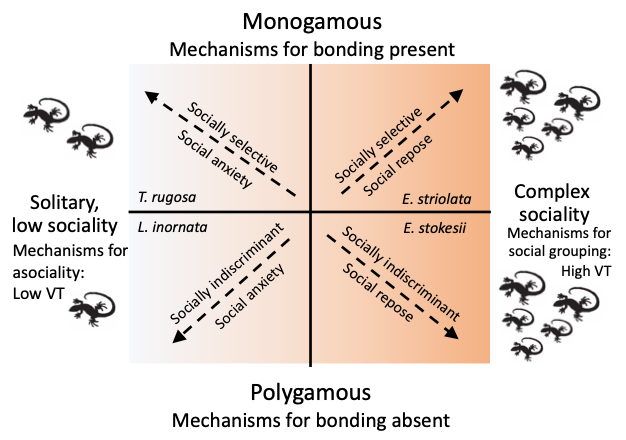
We use the family-dwelling Australian tiliquin (Egernia–Liopholis clade) skinks to understand social plasticity and the origins of family living. We ask which social and environmental conditions drive species towards family living and cooperation, and the degree to which sociality is plastic.
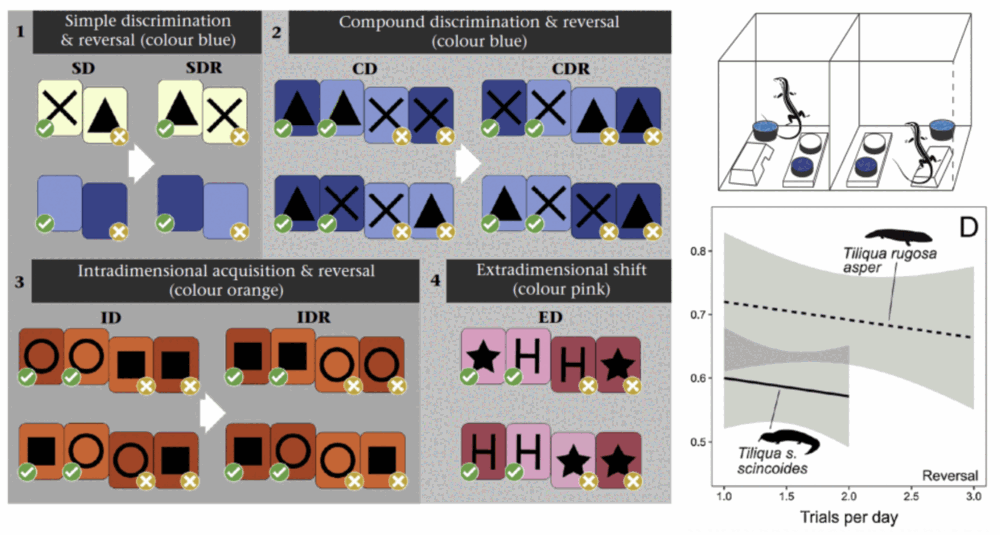
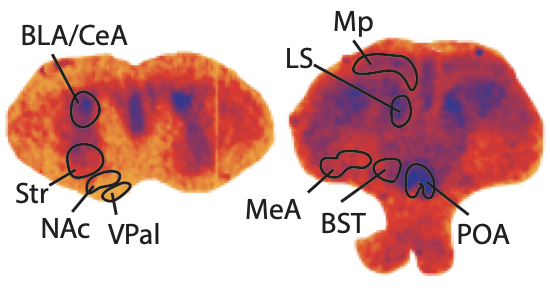
Our work on mechanisms of complex sociality examines how the social environment interacts with the brain, how neuropeptides moderate aggression and enhance pair bonds and associations, and how maternal care affects offspring social development and cognition. Ultimately, we are interested in the possibility of a general theory for the evolution of vertebrate sociality.